 Save to Pinterest
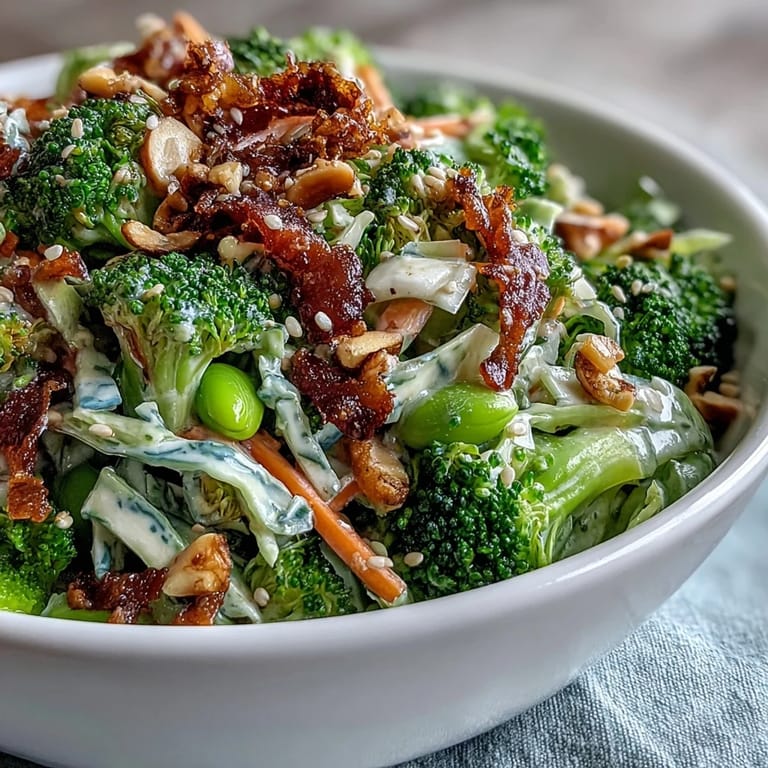
 My coworker brought this salad to a potluck last summer, and I watched people come back for thirds—something I'd rarely seen at office gatherings. She mentioned spending just 15 minutes in the kitchen, and I was convinced she was exaggerating until I made it myself. The crunch, the brightness, the way that ginger-soy dressing somehow made everything taste like it belonged together—I've been making it weekly ever since. It's become my go-to when I need something that feels both nourishing and exciting, without the fuss.
I made this for my sister's family dinner, expecting it to be ignored in favor of the heavier dishes. Instead, my eight-year-old nephew asked for the recipe, which felt like winning an award—getting a kid to genuinely love vegetables is no small feat. His mom now makes it every weekend, and it's become the salad that actually disappears from the table.
Ingredients
- Broccoli florets: Use fresh and chop them small enough to feel delicate but substantial; frozen works in a pinch but fresh has that satisfying snap.
- Purple cabbage: It holds its color and crunch even after sitting in dressing, unlike green cabbage which can wilt.
- Carrots: Shredding them by hand gives you thicker pieces than a food processor; I prefer that texture.
- Edamame: Buy frozen shelled for convenience, or shell them yourself if you enjoy that kind of meditative task.
- Green onions and bell pepper: These are your brightness—don't skip them even if you think you're not a fan.
- Sesame seeds: Toasting them takes three minutes and transforms them from bland to nutty and complex; it's worth it.
- Soy sauce: Use tamari if you need gluten-free, and quality matters here since it's a main flavor note.
- Rice vinegar: It's milder than regular vinegar, which keeps this salad from tasting aggressive.
- Sesame oil: Just a tablespoon is enough; it's potent and delicious, so you don't need much.
- Honey or maple syrup: This balances the salt and acid; I use maple syrup because I usually have it on hand.
- Garlic and ginger: Fresh is non-negotiable here—they're the secret that makes people ask what you did differently.
Tired of Takeout? 🥡
Get 10 meals you can make faster than delivery arrives. Seriously.
One email. No spam. Unsubscribe anytime.
Instructions
- Prep your vegetables with intention:
- Chop the broccoli into pieces small enough to feel elegant but big enough to not disappear. Shred the cabbage and carrots so they're ribbon-like, then thinly slice the bell pepper and green onions.
- Handle your edamame:
- If frozen, boil them for five minutes, then shock them in cold water and shell them while they're still warm—it's easier that way. Set them aside to cool completely.
- Toast those sesame seeds:
- Pour them into a dry skillet over medium heat and listen for them to start crackling; stir constantly so they brown evenly rather than burn. The moment they smell nutty and toasted, transfer them to a plate immediately—residual heat will keep cooking them.
- Build your dressing:
- Whisk together soy sauce, rice vinegar, sesame oil, honey, minced garlic, and grated ginger in a small bowl until the honey dissolves completely. Taste it—it should balance salty, tangy, and slightly sweet all at once.
- Toss everything together:
- Put all your vegetables and edamame into a large bowl, pour the dressing over them, and toss until every piece is coated. Don't be shy with the tossing; you want the flavors to mingle.
- Finish with the sesame seed crown:
- Sprinkle those toasted seeds over top just before serving, or refrigerate the salad and add them later if you're making it ahead. Serve immediately if you want maximum crunch, or let it sit overnight if you prefer everything to marry together.
 Save to Pinterest
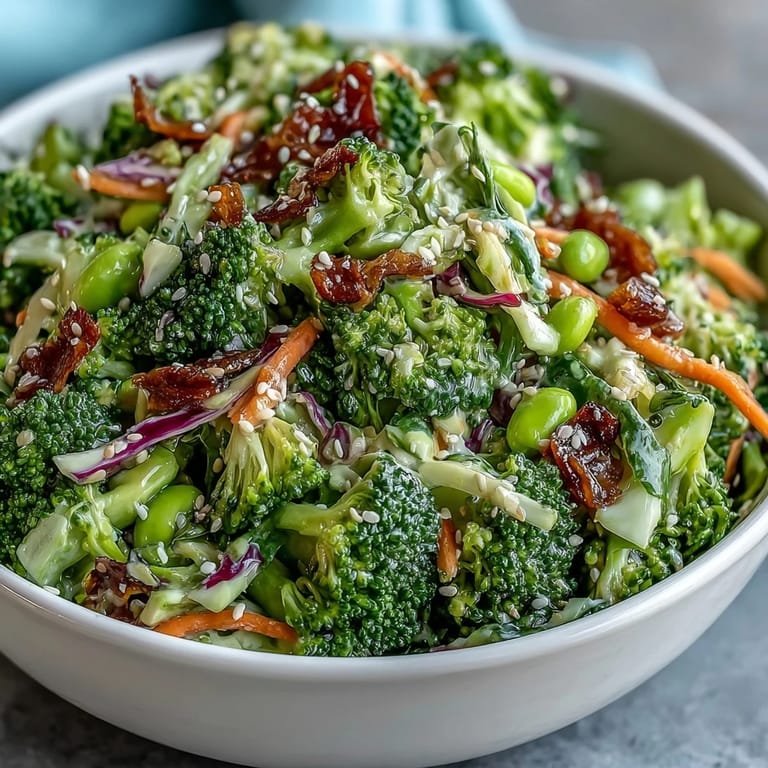
 Last month, I brought this salad to a friend's house for dinner, and she asked me to leave the recipe written down because her teenage son—normally a pizza-and-nuggets kid—had actually complimented the food. It became a small moment of connection, this simple salad becoming something that bridged their dinner table conversation.
Why This Salad Works
The genius of this salad is that it respects your time while delivering genuine flavor. The dressing does most of the heavy lifting, transforming simple raw vegetables into something that tastes intentional and composed. You're not standing over a stove; you're wielding a knife and a whisk, which somehow feels more peaceful than cooking.
Meal Prep Magic
I've found that this salad actually improves after sitting in the fridge for a few hours or even overnight. The vegetables soften slightly and absorb the dressing more deeply, creating a more cohesive flavor. Keep the sesame seeds separate and add them right before eating if you want them to stay crunchy, or toss everything together the night before if you want a softer, more marinated version.
Ways to Build on This Base
This salad is flexible enough to adapt to what you have in your kitchen or what you're craving. Add protein like grilled chicken, crispy tofu, or shrimp if you want it for dinner instead of a side dish. The dressing is so good that it works with almost any combination of crunchy vegetables, so feel free to swap in snap peas, water chestnuts, or cucumber.
- Sprinkle chopped almonds or cashews on top for even more crunch and richness.
- Add a splash of rice vinegar to the dressing if it tastes too salty, or more honey if it's too sharp.
- Make a double batch of the dressing and use it on grain bowls or roasted vegetables throughout the week.
 Save to Pinterest
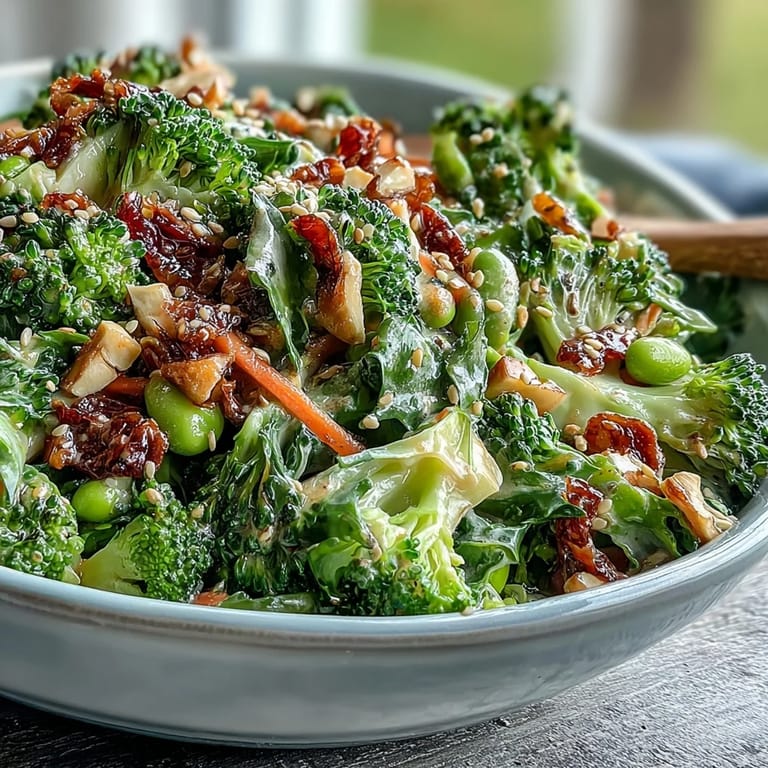
 This salad has become my answer to the question of how to eat well without feeling deprived. It's proof that simple vegetables and a good dressing can be genuinely exciting.
Common Recipe Questions
- → How do I prepare the edamame?
Cook frozen edamame according to package instructions, then cool and shell before adding to the salad.
- → Can I make this gluten-free?
Yes, substitute soy sauce with tamari to keep the dressing gluten-free without compromising flavor.
- → What gives the salad its crunch?
Fresh broccoli florets, shredded cabbage, carrots, and toasted sesame seeds provide a crisp, crunchy texture.
- → Is it okay to prepare this salad in advance?
Absolutely. The salad can be made ahead and refrigerated for up to two days to allow flavors to meld.
- → What variations can I try for the edamame?
You can swap edamame with chickpeas or cooked lentils for different textures and flavors.