 Save to Pinterest
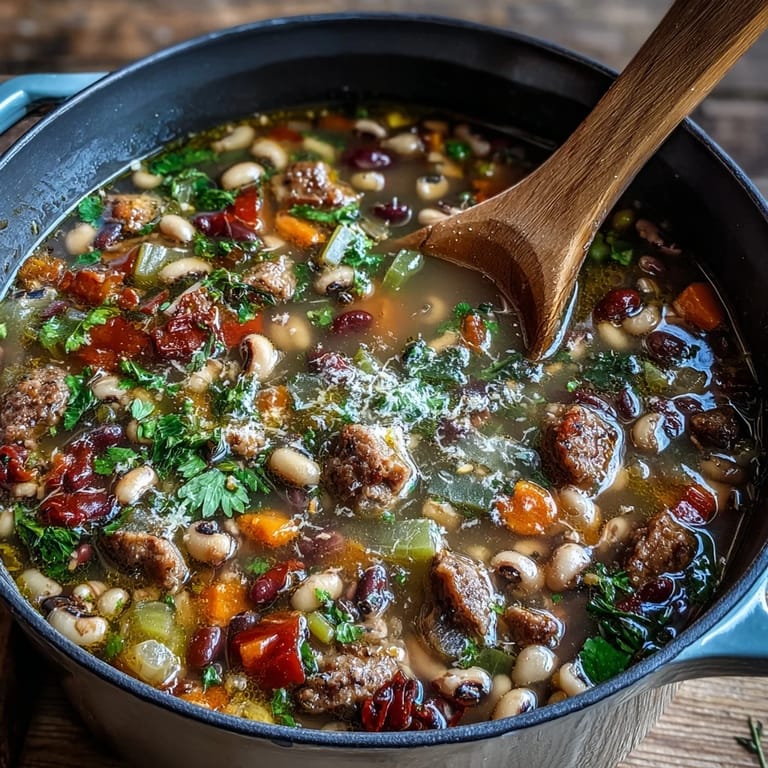
 There's something about the smell of Italian sausage hitting a hot pot that instantly transforms a Tuesday evening into something worth savoring. My neighbor knocked on the door one chilly October afternoon with a bag of fresh sausages from her family's butcher, and rather than just saying thanks, I invited her in to help me build this soup. By the time we'd chopped the vegetables and the broth was simmering, she was already texting her sister the recipe. That's when I knew this was more than just a weeknight dinner—it was the kind of dish that makes people want to stay awhile.
I made this for a small dinner party last winter, and what struck me most wasn't the compliments (though there were plenty) but the way everyone slowed down while eating it. No one was rushing through bowls or picking at their phones. The combination of warmth, substance, and honest flavor just seemed to demand presence, and I watched people ask for seconds while genuinely asking about the recipe rather than half-listening.
Ingredients
- Italian sausage (450 g / 1 lb, mild or spicy): This is your flavor anchor—choose mild if you want the soup to stay approachable for everyone, or spicy if you're cooking for people who like a little heat to the finish.
- Yellow onion (1 medium, diced): The sweet foundation that softens into the broth, so don't skip the proper dicing or you'll end up with large, unpleasant chunks.
- Carrots (2, peeled and sliced): These add natural sweetness and a gentle earthiness that balances the tomatoes and herbs.
- Celery stalks (2, sliced): Often overlooked, celery is what gives this soup its quiet backbone and keeps it from tasting one-dimensional.
- Garlic (3 cloves, minced): Always mince it fresh—jarred garlic will make the soup taste flat by comparison.
- Red bell pepper (1, diced): Adds brightness and a subtle sweetness that rounds out the savory sausage and herbs.
- Diced tomatoes (1 can, 400 g / 14 oz with juices): The acidity here is essential; it cuts through the richness and keeps the whole soup from feeling heavy.
- Black-eyed peas (2 cans, 400 g / 14 oz each, drained and rinsed): Canned is perfectly fine and honestly saves you hours—just rinse them well to reduce bloating.
- Low-sodium chicken broth (1.25 liters / 5 cups): Low-sodium matters because you'll be seasoning as you go and you don't want to end up with an over-salted soup by the end.
- Dried thyme (1 tsp): This herb is the soul of the dish; it's warm and slightly piney without being aggressive.
- Dried oregano (1 tsp): Works with the thyme to build that Italian-inspired depth, though not so much that it tastes medicinal.
- Bay leaf (1): Don't forget to fish it out before serving, or better yet, tie it to the pot handle with kitchen twine so you can find it easily.
- Crushed red pepper flakes (½ tsp, optional): For those who want a whisper of heat—you can always add more at the table if someone's feeling bold.
- Salt and black pepper (to taste): Season gradually throughout cooking rather than all at once; your palate will guide you better than any recipe.
- Fresh parsley (2 tbsp, chopped for garnish): This brightens the finished bowl and adds a visual pop that makes people feel like you actually cared about presentation.
- Parmesan cheese (optional, for serving): A light sprinkle adds richness without overwhelming the delicate balance you've built.
Tired of Takeout? 🥡
Get 10 meals you can make faster than delivery arrives. Seriously.
One email. No spam. Unsubscribe anytime.
Instructions
- Brown your sausage:
- Get your pot hot over medium heat, then break the sausage into small crumbles as it cooks—you want irregular pieces, not a uniform ground meat paste. After about 5 to 7 minutes, when there's no pink left and it's starting to look slightly golden at the edges, you're done.
- Build your aromatic base:
- Toss in the onion, carrots, celery, bell pepper, and garlic all at once. The vegetables will release their moisture and start to soften as they sauté for about 5 minutes—you're looking for the onions to turn translucent, not browned.
- Combine everything:
- Pour in the tomatoes with all their liquid, add the drained black-eyed peas, broth, and dry herbs including the bay leaf. Stir well and scrape up any browned bits from the bottom of the pot—that's pure flavor you don't want to waste.
- Simmer gently:
- Bring it to a boil, then immediately turn the heat down to low, cover with a lid, and let it bubble softly for 20 minutes. You'll hear the occasional gentle pop from the surface; that's the soup doing exactly what it should.
- Season and serve:
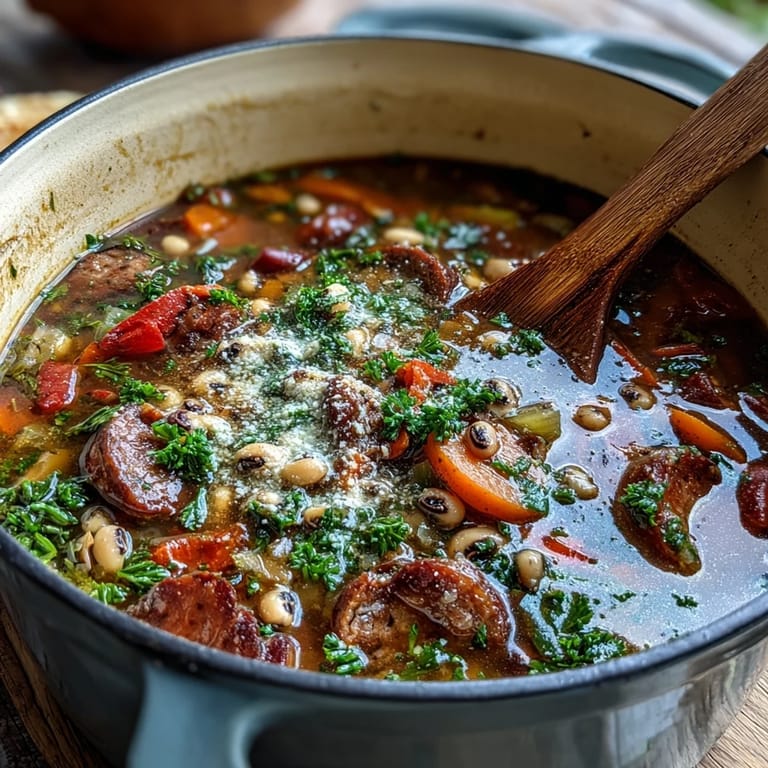
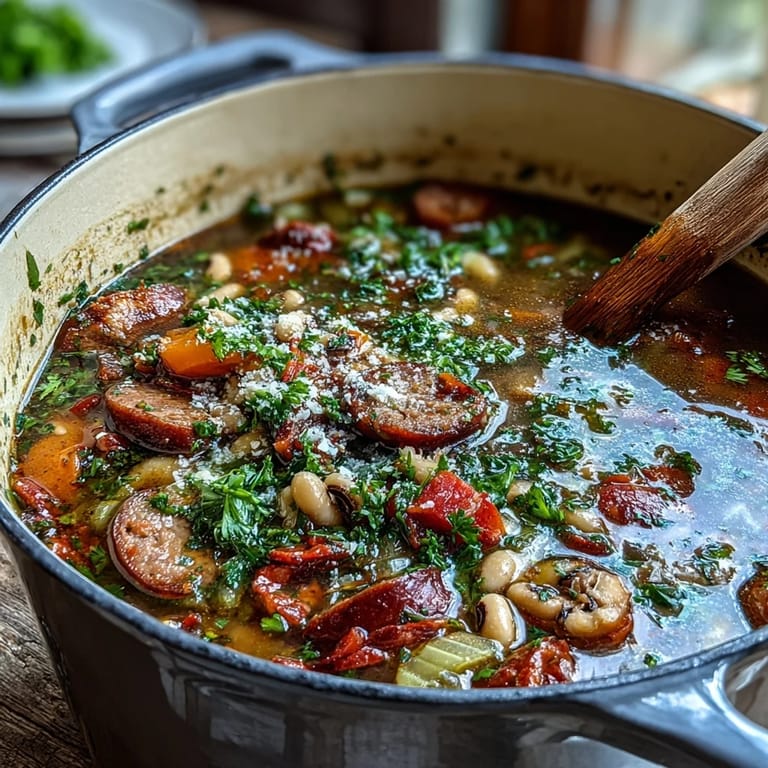
- Taste a spoonful of broth and season with salt and pepper—go slowly, a pinch at a time. Fish out the bay leaf, then ladle into bowls and crown each one with a scatter of parsley and a whisper of Parmesan if you'd like.
 Save to Pinterest
 What I love most about this soup is that it's become the dish I make when I want to show someone I'm thinking of them without being showy about it. It's unpretentious, honest, and fills the kitchen with a warmth that has nothing to do with the stove.
The Sausage Question
Not all sausages are created equal, and choosing the right one will completely change how this soup tastes. I've made it with hot Italian sausage from the butcher counter, mild bulk sausage from the supermarket, and even chicken sausage when I was trying to eat lighter. Each version was delicious in its own way, though the traditional pork sausage gives you the richest, most satisfying result. The key is to taste as you go and adjust your other seasonings accordingly—if your sausage is particularly flavorful, you might not need as much salt later.
Making It Your Own
Once you understand how this soup works, you can start playing with it. I've added spinach in the last few minutes for color and nutrition, swapped the black-eyed peas for cannellini beans, and even stirred in a splash of red wine when I wanted something a bit more sophisticated. The formula stays the same—sausage, aromatics, tomatoes, beans, broth, and herbs—but the variations are endless. Think of it as a framework rather than a rigid instruction, and you'll find yourself making different versions depending on what's in your pantry and what you're craving.
Serving and Storing
Serve this soup in shallow bowls so the broth has room to breathe, and always have crusty bread nearby for soaking up the bottom of the bowl. It keeps beautifully in the refrigerator for up to four days, and the flavors actually deepen overnight as the herbs continue to infuse the broth. You can also freeze it in portions and reheat gently on the stovetop—just add a splash of broth if it seems too thick after thawing.
- Let the soup cool slightly before storing so you're not heating up your entire refrigerator.
- If you're reheating from frozen, go low and slow rather than blasting it on high heat.
- A fresh squeeze of lemon juice right before serving brightens everything and adds complexity you didn't know was missing.
 Save to Pinterest
 This is the kind of soup that teaches you something about cooking and comfort at the same time. Make it for yourself on a quiet evening, or make it for people you want to linger at your table a little longer.
Common Recipe Questions
- → Can I make this soup vegetarian?
Yes. Simply omit the Italian sausage and substitute vegetable broth for the chicken broth. Add smoked paprika or extra vegetables to maintain depth of flavor.
- → Can I use dried black-eyed peas instead of canned?
Absolutely. Soak dried peas overnight, then cook until tender before adding to the soup. You'll need about 1.5 cups dried peas to equal the canned amount.
- → How should I store leftovers?
Store cooled soup in an airtight container in the refrigerator for up to 4 days. The flavors often improve after a day. Reheat gently on the stove, adding broth if needed.
- → Can I freeze this soup?
Yes, it freezes well for up to 3 months. Cool completely before transferring to freezer-safe containers. Thaw overnight in the refrigerator before reheating.
- → What can I serve with this soup?
Crusty bread, cornbread, or garlic bread are classic choices. For a heartier meal, serve over steamed rice. A light Chianti or Pinot Noir pairs nicely.
- → How can I make the soup thicker?
Mash a portion of the black-eyed peas against the side of the pot before serving. You can also let it simmer uncovered longer to reduce the liquid slightly.