 Save to Pinterest
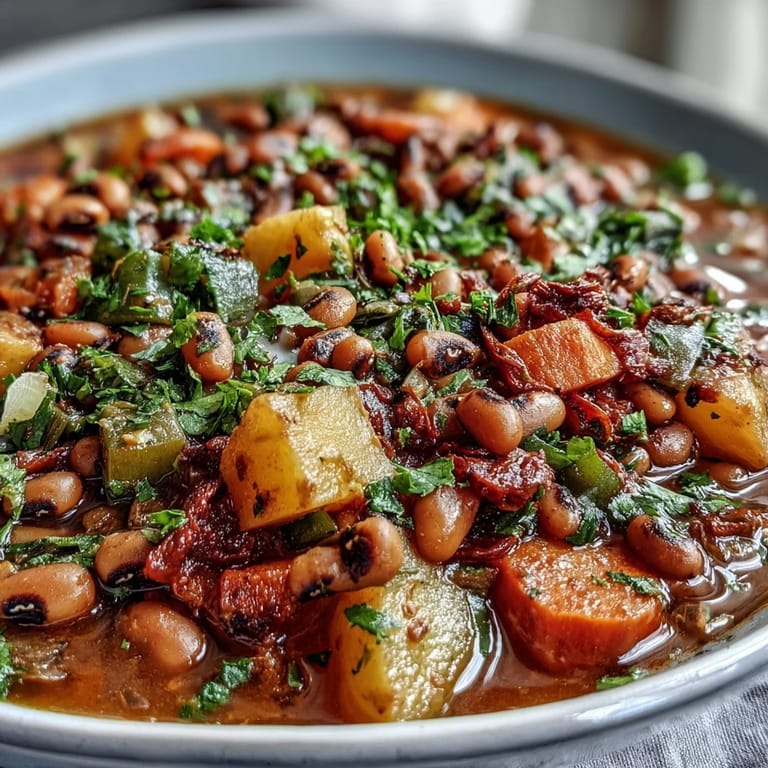
 There's something about a pot of black-eyed pea stew that makes a kitchen feel like home, even on days when everything else feels scattered. My neighbor brought a bowl over one autumn evening, steam rising from the lid, and I was struck by how something so simple could taste so complete. The sweet onions had caramelized just enough to add depth, the potatoes had softened into the broth without falling apart, and the black-eyed peas held their shape like little treasures. I've been making it ever since, tweaking it slightly each time, but the core of it remains unchanged because it didn't need fixing.
I made this for a potluck where half the guests were vegetarian and half had strong opinions about what comfort food should be, and somehow it satisfied everyone. There was something quiet about watching people come back for seconds, asking for the recipe while still eating. That's when I knew I'd found something worth keeping close.
Ingredients
- Extra virgin olive oil: Use a generous pour at the start—it's not just fat, it's the foundation that catches the sweetness of the onions and builds flavor from the very first sizzle.
- Sweet onion: Dice it small so it melts into the broth rather than staying chunky; the smaller pieces caramelize faster and disappear into background richness.
- Carrots and celery: These are your aromatic base; don't skip them or rush them, they need those few minutes to soften and release their natural sugars.
- Potatoes: Cut them uniform in size so they cook evenly, and peel them if you prefer a smoother stew, or leave the skin on for earthiness and texture.
- Canned diced tomatoes: Don't drain them—that juice is liquid gold and carries the acidity that balances the earthiness of the peas.
- Garlic: Mince it fine and add it after the softer vegetables so it doesn't burn and turn bitter.
- Black-eyed peas: If using canned, rinse them well to remove the starchy liquid that can cloud your broth.
- Vegetable broth: A good quality broth makes a real difference; if yours tastes weak, add a pinch more salt to compensate.
- Smoked paprika: This is the secret weapon—it adds a whisper of smokiness that makes people wonder what you did differently.
- Fresh parsley: Save it for the end, stirred in at the last moment so it stays bright and doesn't fade into the heat.
Tired of Takeout? 🥡
Get 10 meals you can make faster than delivery arrives. Seriously.
One email. No spam. Unsubscribe anytime.
Instructions
- Build your flavor base:
- Heat the oil until it shimmers, then add the diced onion and let it soften for those 3 to 4 minutes, stirring now and then until the edges turn translucent and it starts to smell almost sweet. You're not rushing this part; you're creating the foundation everything else will rest on.
- Deepen with aromatics:
- Toss in the carrots and celery and give them 4 minutes to soften, letting them absorb some of that oil and onion flavor. The whole kitchen should smell like comfort by now.
- Add the potatoes and garlic:
- Let the potatoes sit for a couple of minutes to start releasing their starch, then add the garlic and stir constantly for about a minute until fragrant. That smell is your signal that everything is on track.
- Build the broth:
- Pour in the tomatoes with all their juice and the vegetable broth, then add the bay leaf, thyme, smoked paprika, pepper, and salt all at once. Give it a good stir so the spices distribute evenly and don't settle at the bottom.
- First simmer:
- Bring it to a gentle boil, then turn the heat down and let it simmer uncovered for about 15 minutes until the potatoes and carrots are almost tender but still hold their shape. Taste the broth during this time—it should taste good enough to sip on its own.
- Introduce the peas:
- Stir in the black-eyed peas and let everything simmer together for another 10 minutes, which gives them time to warm through and absorb the flavors around them. The vegetables should be completely tender now, and the whole pot should taste like one unified thing.
- Final adjustments:
- Fish out the bay leaf, then taste and adjust the seasoning—sometimes it needs a bit more salt, sometimes a pinch more paprika. This is your moment to make it exactly how you want it.
- Finish and serve:
- Stir in the fresh parsley right at the end so it stays bright and alive, then ladle it into bowls and top with extra parsley for color. Serve it with crusty bread so you can soak up every last drop of broth.
 Save to Pinterest
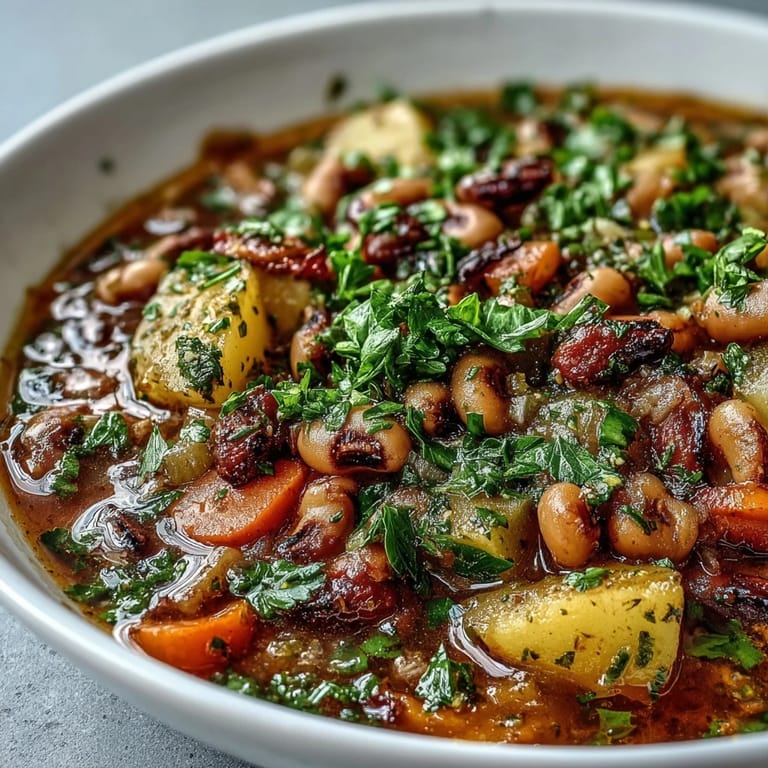
 There was a cold Tuesday when I brought this to work and my desk neighbor, who usually brought salads in those perfect glass containers, quietly asked if I'd ever consider teaching her how to make it. We ended up cooking it together one Sunday, and she burned the garlic on her first try, laughed about it, and made it again the next week. That's when I realized this stew had become something that connects people.
The Magic of Smoked Paprika
The first time I made this without smoked paprika, thinking I could substitute regular paprika, I was shocked at how flat it tasted. It's not just a spice—it's a shortcut to a depth that would otherwise take hours of slow cooking. A quarter teaspoon more than the recipe calls for adds intrigue without overwhelming the other flavors, though I'd only recommend that if you love smoke.
Why This Works as a One-Pot Meal
Everything cooks together in one pot because the vegetables are cut to similar sizes and added in a logical order based on how long they take to soften. The broth carries flavors from one ingredient to the next, so nothing tastes isolated or separate. By the time you serve it, it tastes like it's been simmering for twice as long as it actually has.
Variations and Adaptations
This stew is forgiving, which is part of why I keep making it. You can add a dash of liquid smoke if you want more depth, or stir in chopped kale in the last few minutes for something green and slightly bitter to cut through the richness. Some versions add a chipotle pepper for heat, others call for a splash of hot sauce at the table. There's also something nice about serving it over rice instead of just with bread, turning it into something a bit more substantial.
- For a spicier version, add a minced chipotle pepper or a teaspoon of hot sauce while simmering.
- Kale or spinach stirred in during the last 5 minutes adds nutrition and a pleasant earthiness.
- Leftover stew thickens as it cools and tastes even richer the next day.
 Save to Pinterest
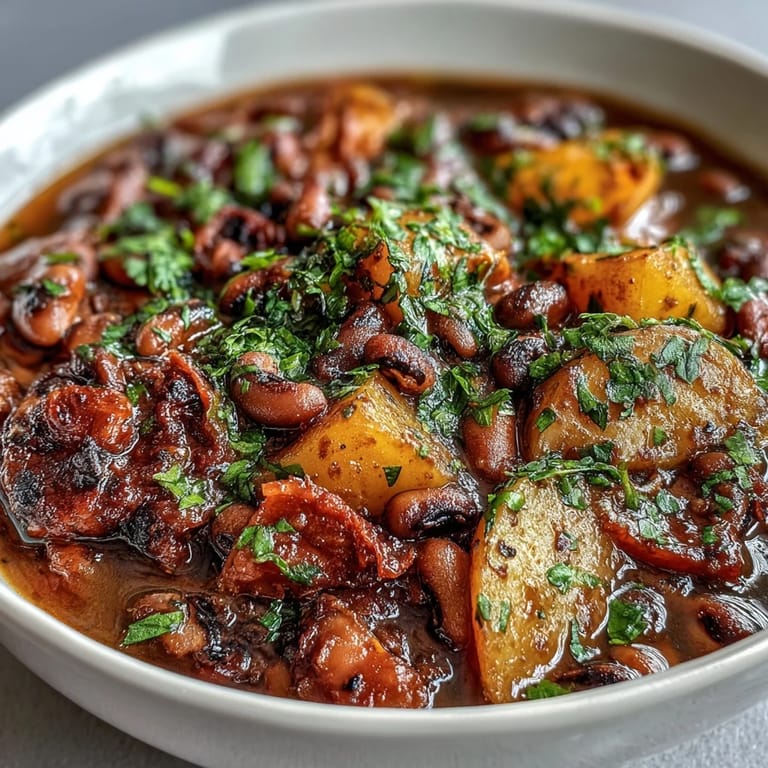
 This is the kind of stew I make when I want to feel like I'm taking care of myself and everyone around me. It asks so little and gives back so much.
Common Recipe Questions
- → Can I use dried black-eyed peas instead of canned?
Yes, you can use dried peas. Soak them overnight and cook until tender before adding to the stew. This will extend the total preparation time but yields excellent texture and flavor.
- → How long does this stew keep in the refrigerator?
This stew stores well for 4-5 days when kept in an airtight container in the refrigerator. The flavors actually improve after a day or two as the ingredients meld together.
- → Can I freeze this stew?
Absolutely. Portion cooled stew into freezer-safe containers and freeze for up to 3 months. Thaw overnight in the refrigerator and reheat gently on the stovetop.
- → What can I serve with this stew?
Crusty bread, cornbread, or serve over steamed rice for a more substantial meal. A simple green salad with vinaigrette makes a nice fresh accompaniment.
- → Is this suitable for meal prep?
Perfect for meal prep. The stew yields 6 generous servings and reheats beautifully. Portion into individual containers for easy grab-and-go lunches throughout the week.
- → Can I add other vegetables?
Certainly. Bell peppers, zucchini, or greens like kale or spinach make wonderful additions. Add heartier vegetables early in cooking, while delicate greens go in during the last 5 minutes.